Vertical Cast Iron Radiator — Triple Column
Overview A vertical cast iron radiator in a triple-column configuration combines traditional material with a space-saving vertical design. Made from cast iron for high thermal mass and durability, the triple-column format offers strong heat output in a compact footprint, making it suitable for rooms where wall space is limited but effective heating is required.
Key features
Design: Triple-column profile (three parallel vertical tubes per section) delivers greater surface area than single- or double-column models, improving heat emission.
Vertical orientation: Tall, narrow form factor fits beneath tall windows, in bays, or between studs — ideal for modern and period homes where horizontal wall length is at a premium.
Heat output: High thermal mass retains and radiates heat steadily after the boiler cycles off, providing comfortable, stable room temperature.
Finish white classic gloss
Connections: Available with bottom plumbing layouts.
Valve compatibility: Works with manual, thermostatic radiator valves (TRV).
Benefits
Efficient room warming: High heat output for its footprint due to three columns and cast iron’s heat retention.
Zoned heating potential: Use in individual rooms to control comfort and energy use with TRVs.
Longevity: Radiators are durable and often serviceable for decades.
Aesthetic flexibility: Complements both period properties and contemporary interiors depending on finish and styling.
Sizing and selection
Determine required BTU based on room volume, insulation, window area, and desired temperature rise.
Calculate how many sections are needed by checking the BTU per section (manufacturer data) and arranging sections vertically to achieve required height and output.
Consider mounting height: Leave adequate clearances from floor and skirting for airflow; wall bracket requirements depend on radiator weight.
Installation notes
Due to weight, handle with care; install using appropriate fixings and wall supports rated for the load.
Bleeding: Cast iron radiators require regular bleeding to remove trapped air and maintain efficiency.
Corrosion protection: Use corrosion inhibitors in sealed hot-water systems; ensure system water quality is maintained.
Compatibility: Confirm boiler and pump capacity can handle added radiative load; in mixed-material systems, follow recommended practices to minimize electrochemical corrosion.
Maintenance
Inspect paint/finish periodically; touch-up as needed to prevent surface rust.
Check valves and connections for leaks.
Flush system periodically if recommended by installer to remove sludge and debris.
Applications
Living rooms, conservatories, hallways, bathrooms (with appropriate finish and clearances), and period property renovations where authentic appearance is desired.
New builds where vertical, space-saving heating elements are preferred.
Specification checklist (typical)
Columns: Triple-column (3)
Height: Customizable — common ranges 600 mm to 1800+ mm
Depth: Depends on section width; typically deeper than single-column models
Connection sizes: 1/2" or 3/4" BSP (check manufacturer)
Mounting: Wall brackets rated per weight
BTU per section: Manufacturer specific — confirm before ordering

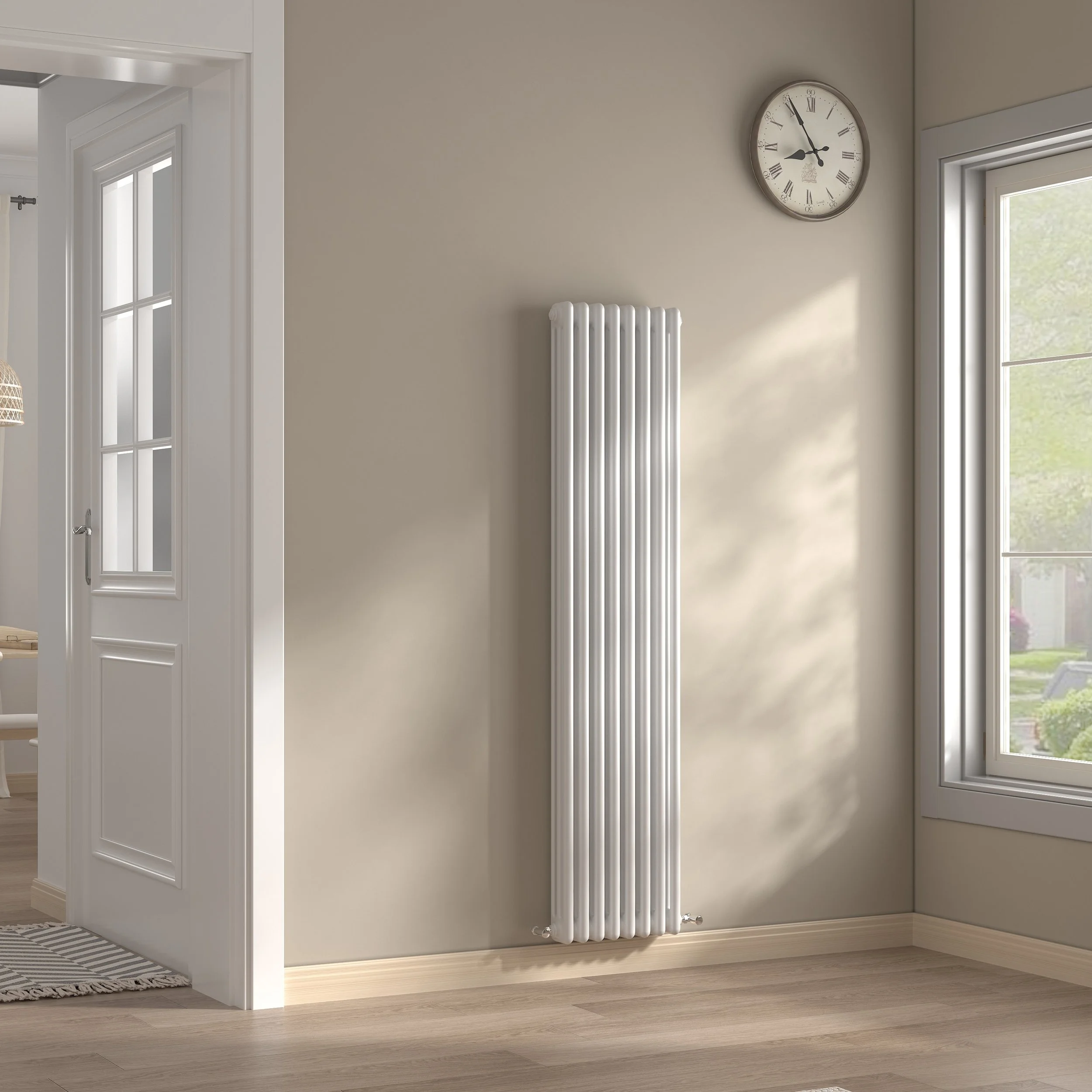 Image 1 of 11
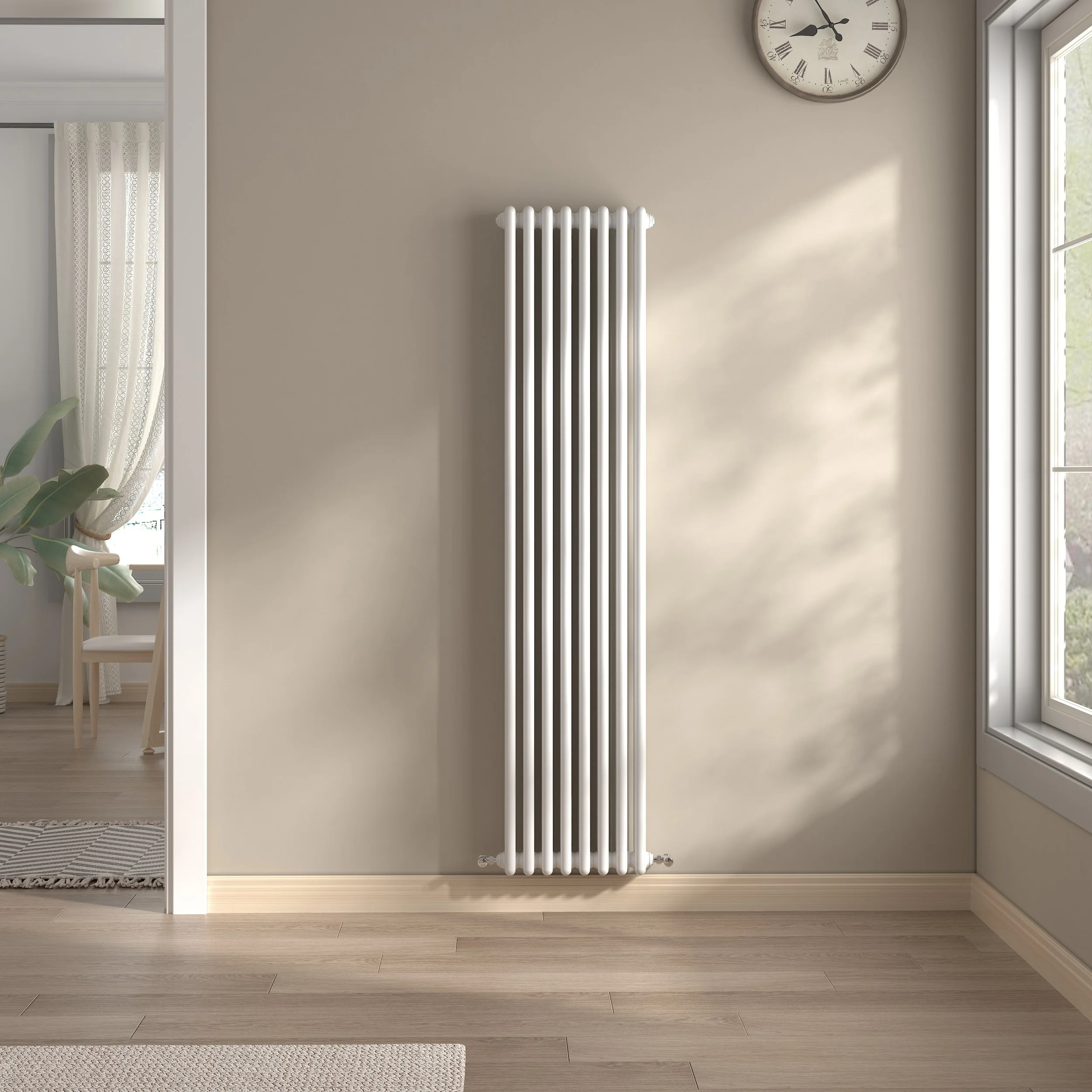 Image 2 of 11
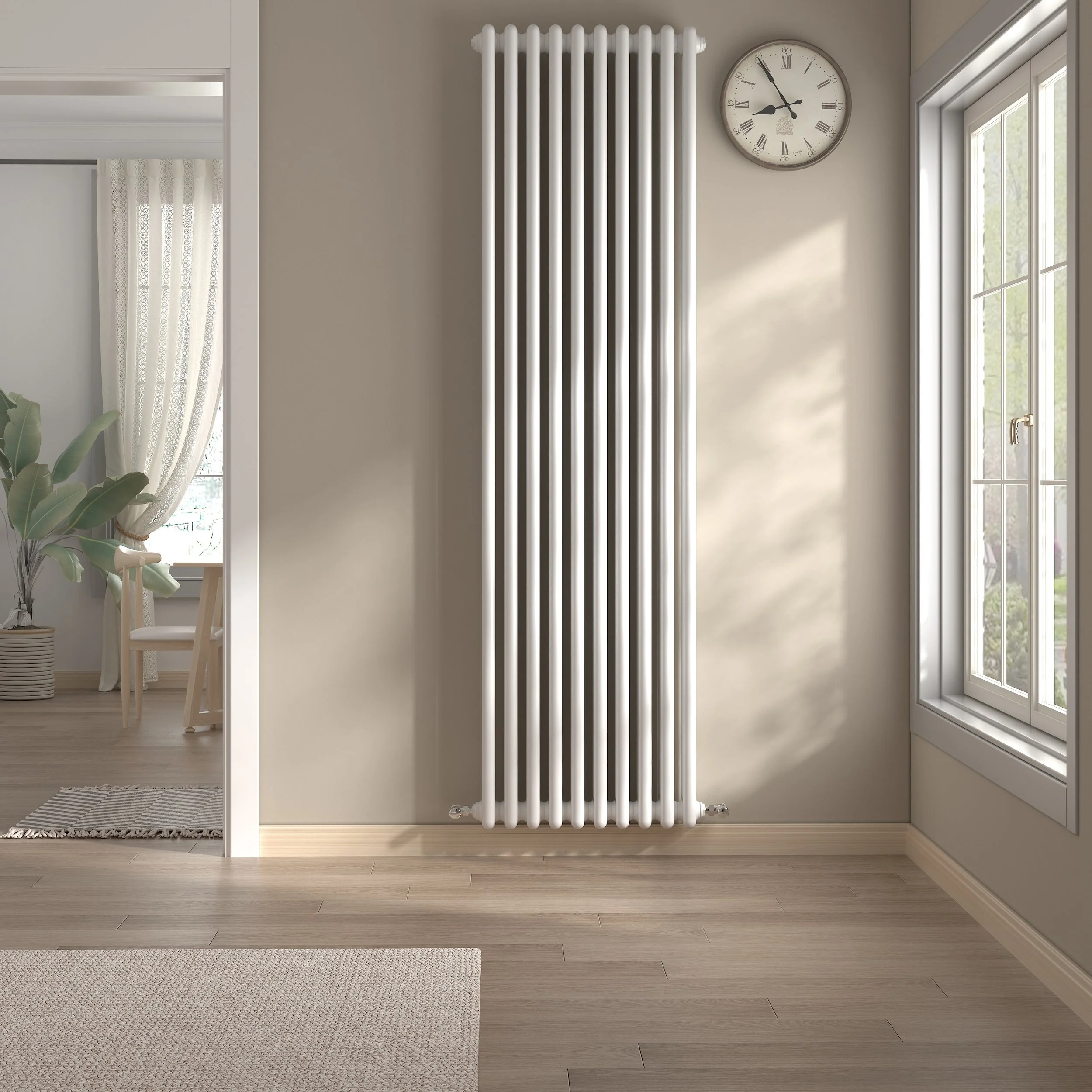 Image 3 of 11
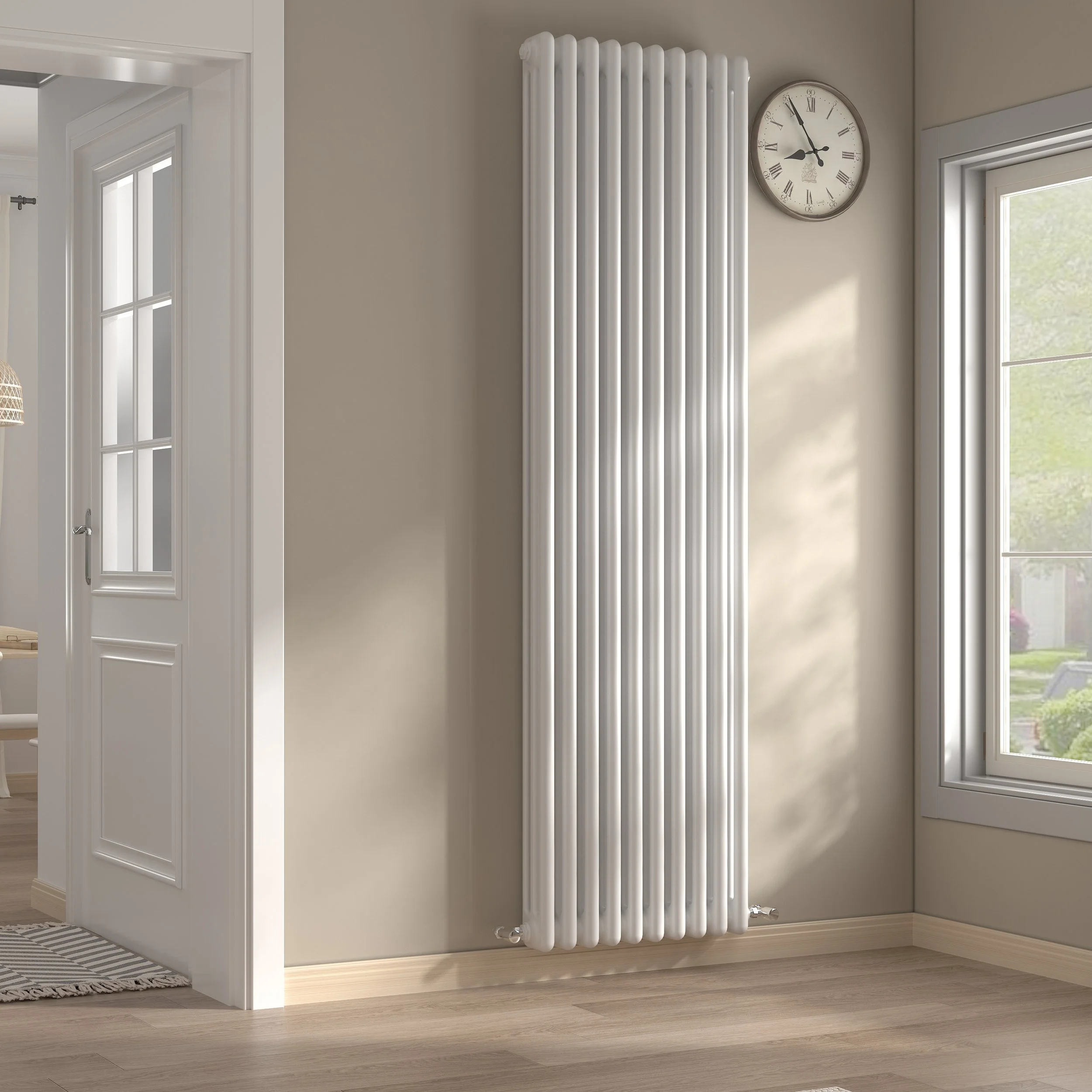 Image 4 of 11
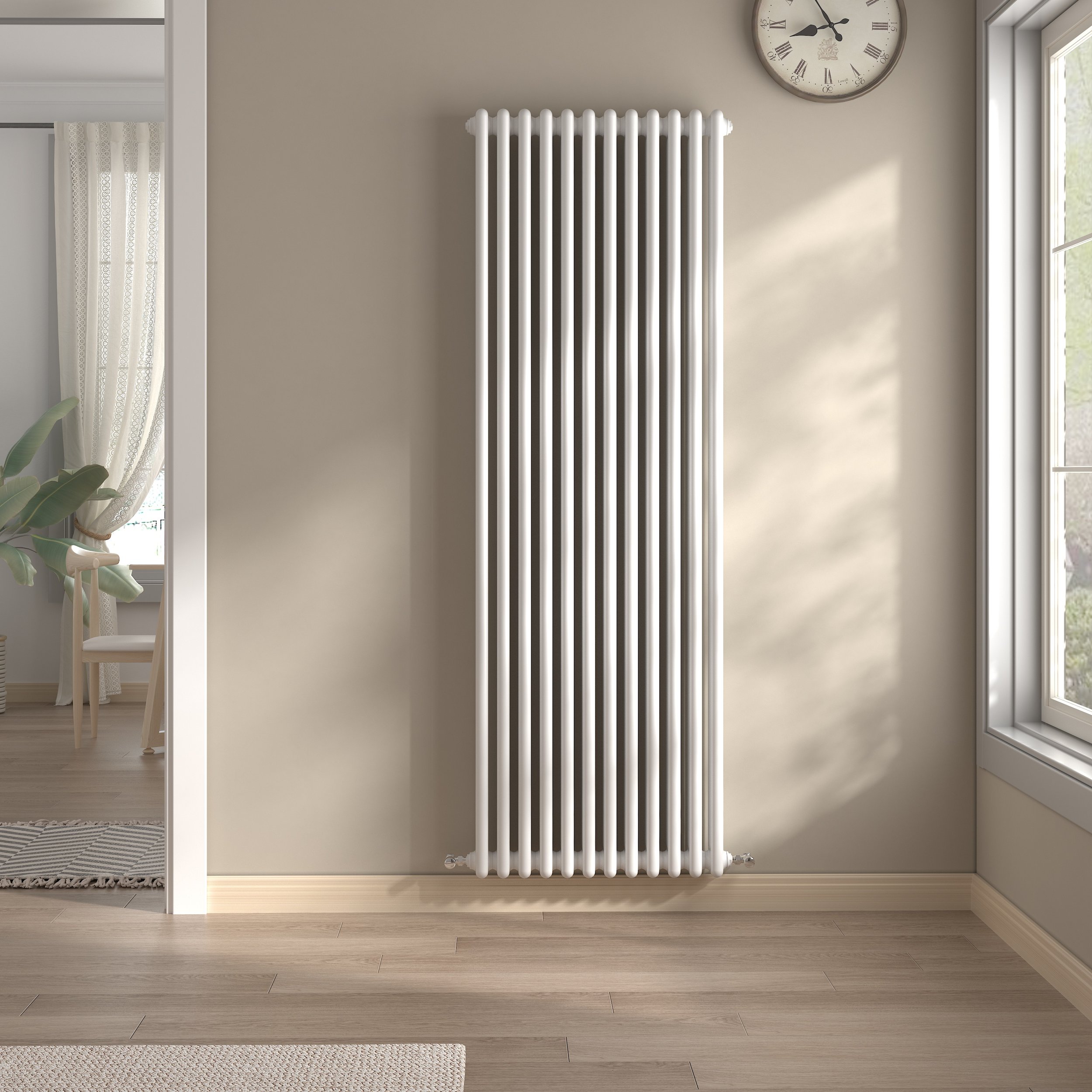 Image 5 of 11
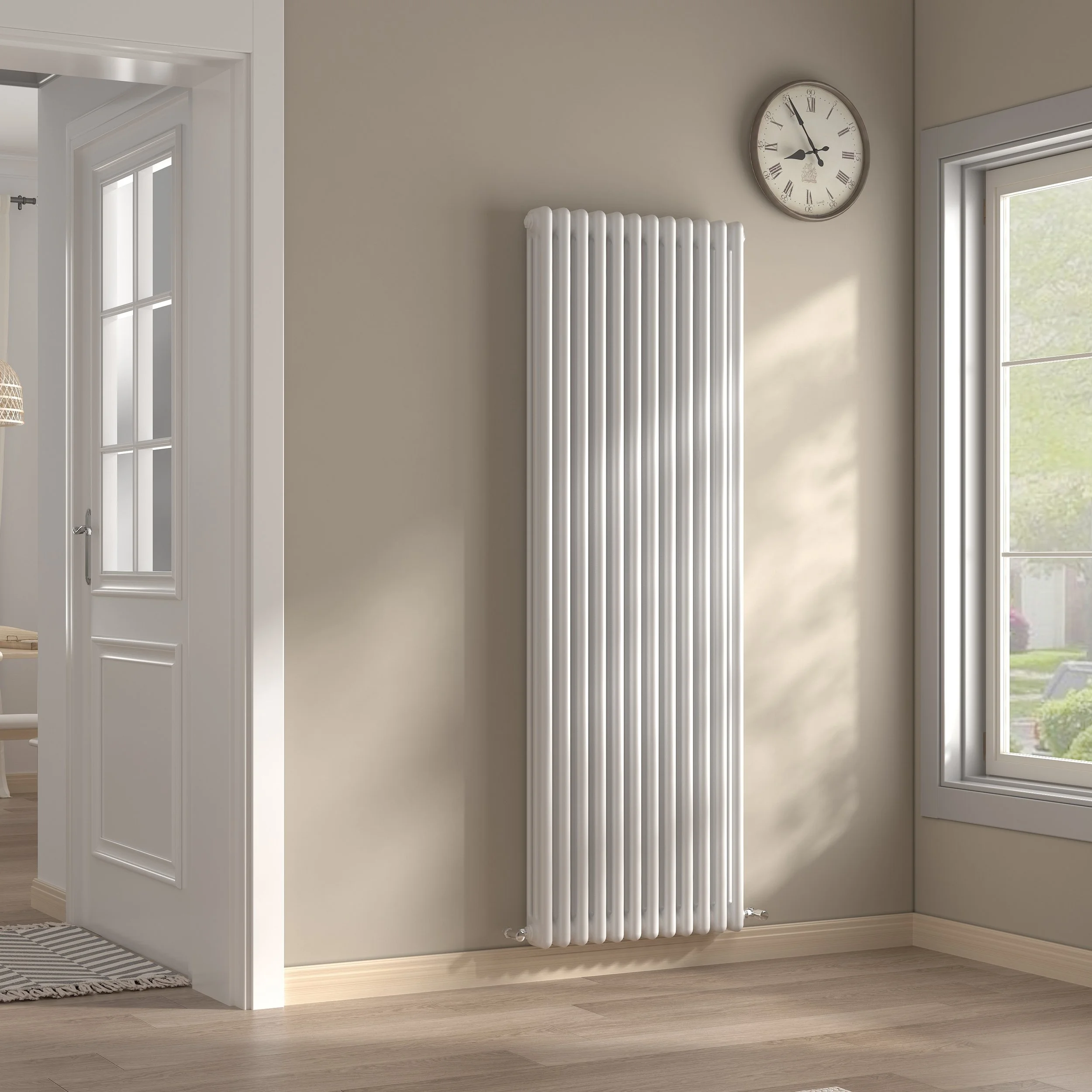 Image 6 of 11
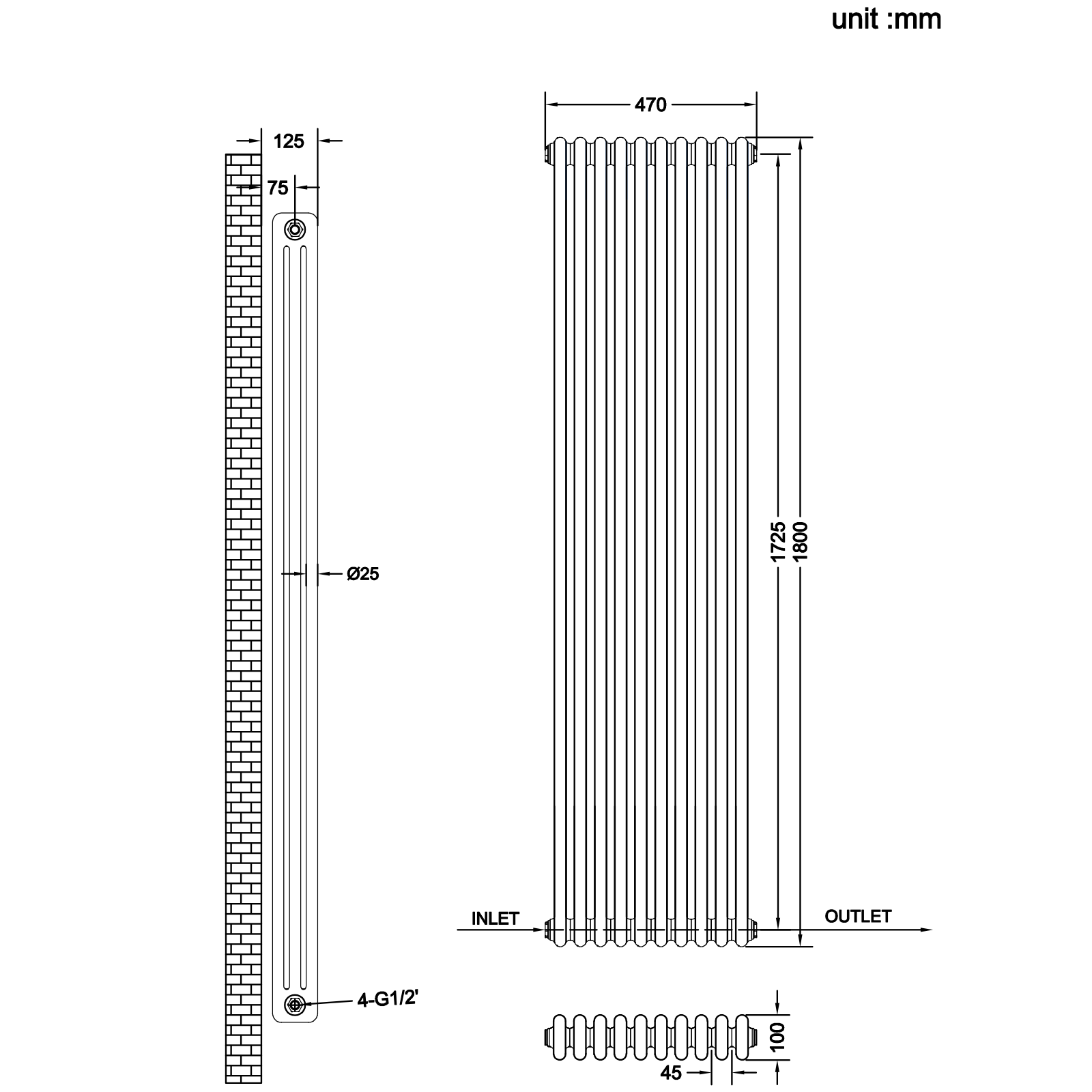 Image 7 of 11
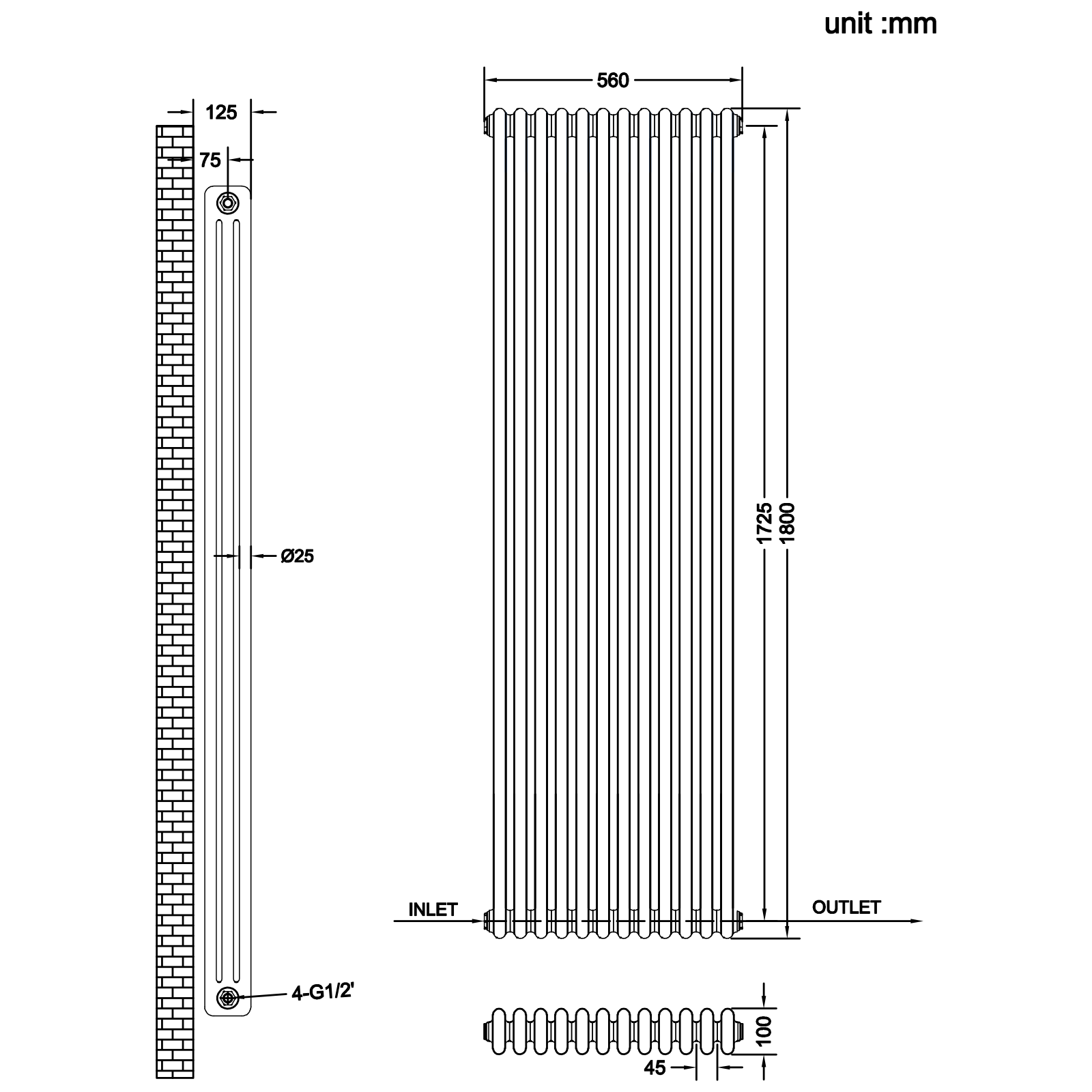 Image 8 of 11
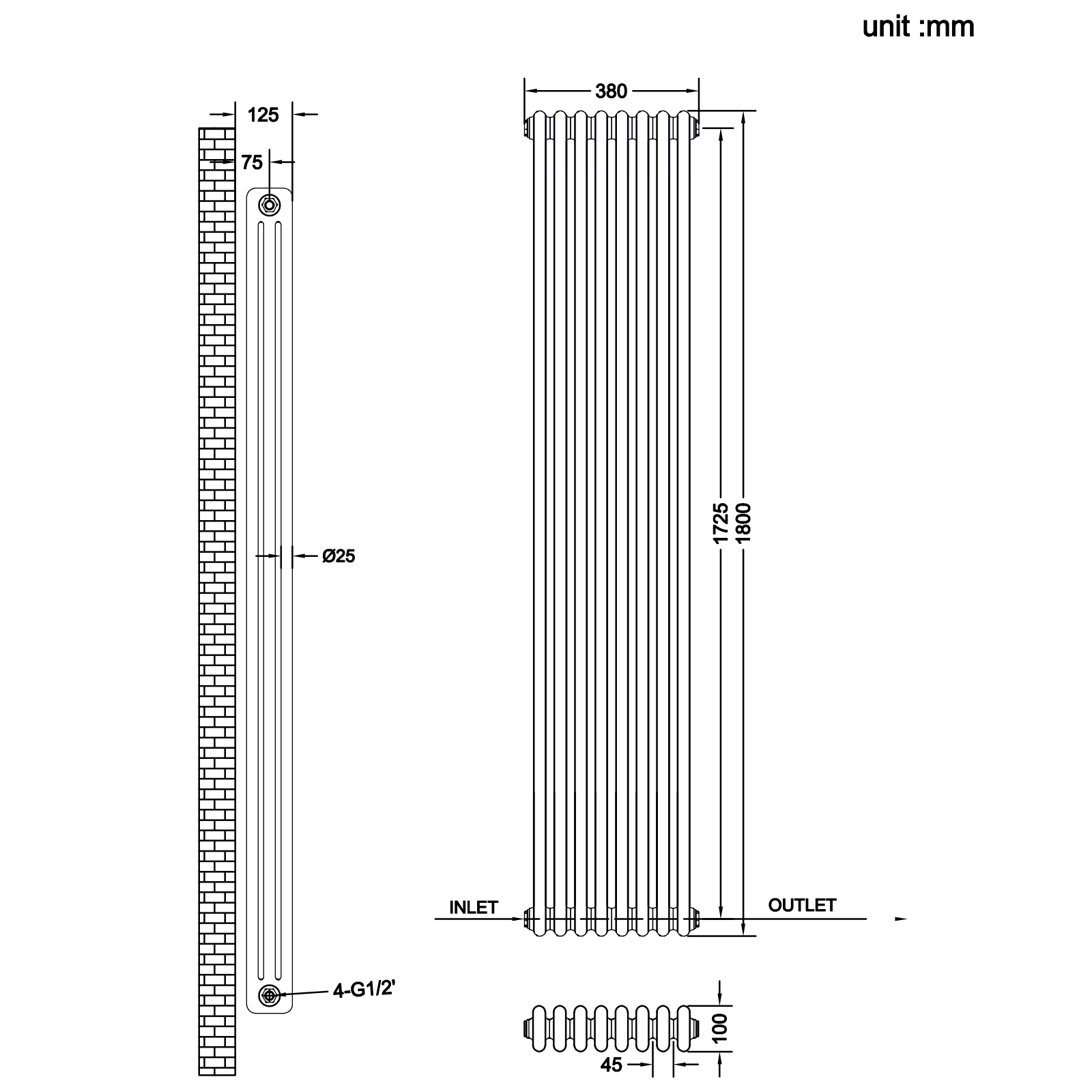 Image 9 of 11
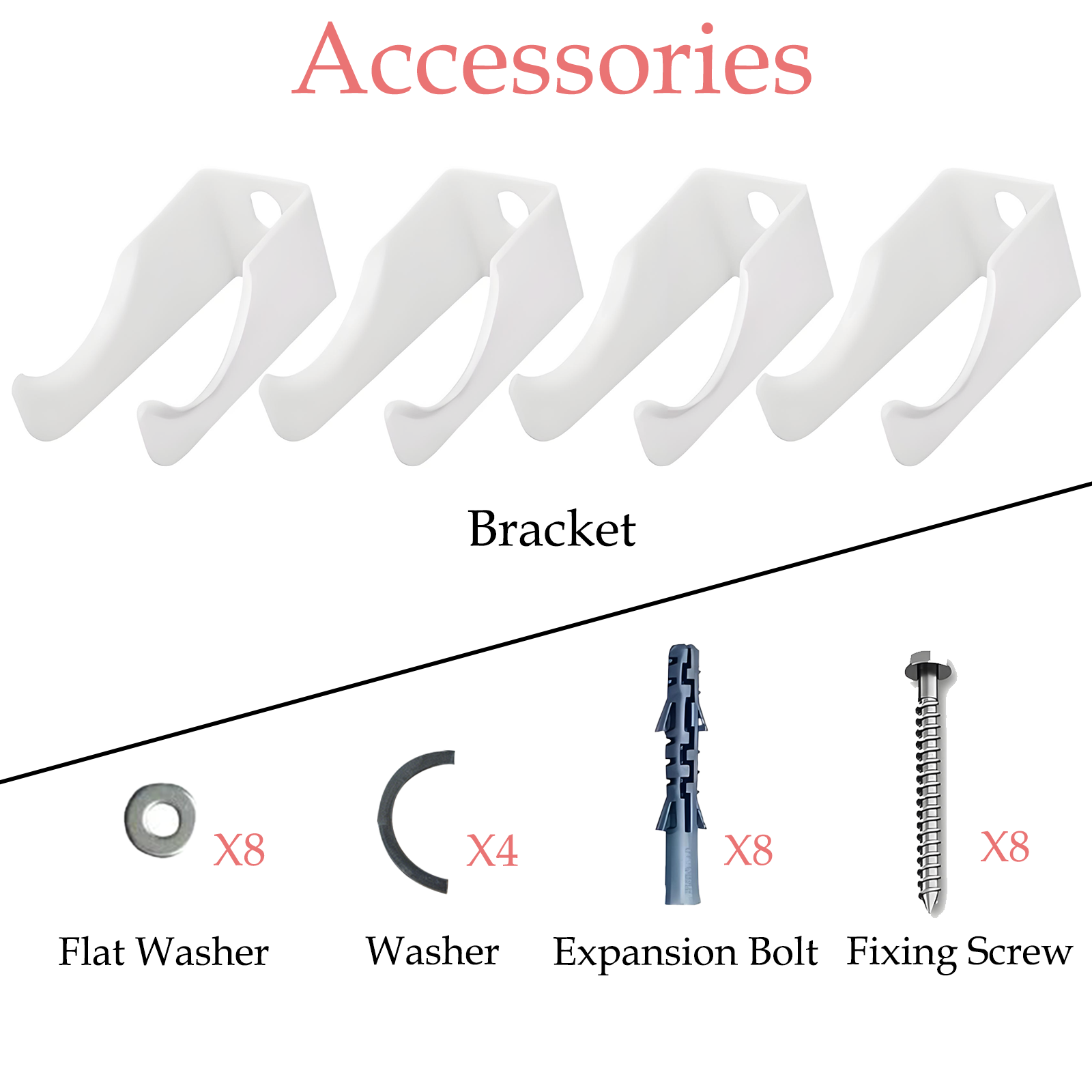 Image 10 of 11
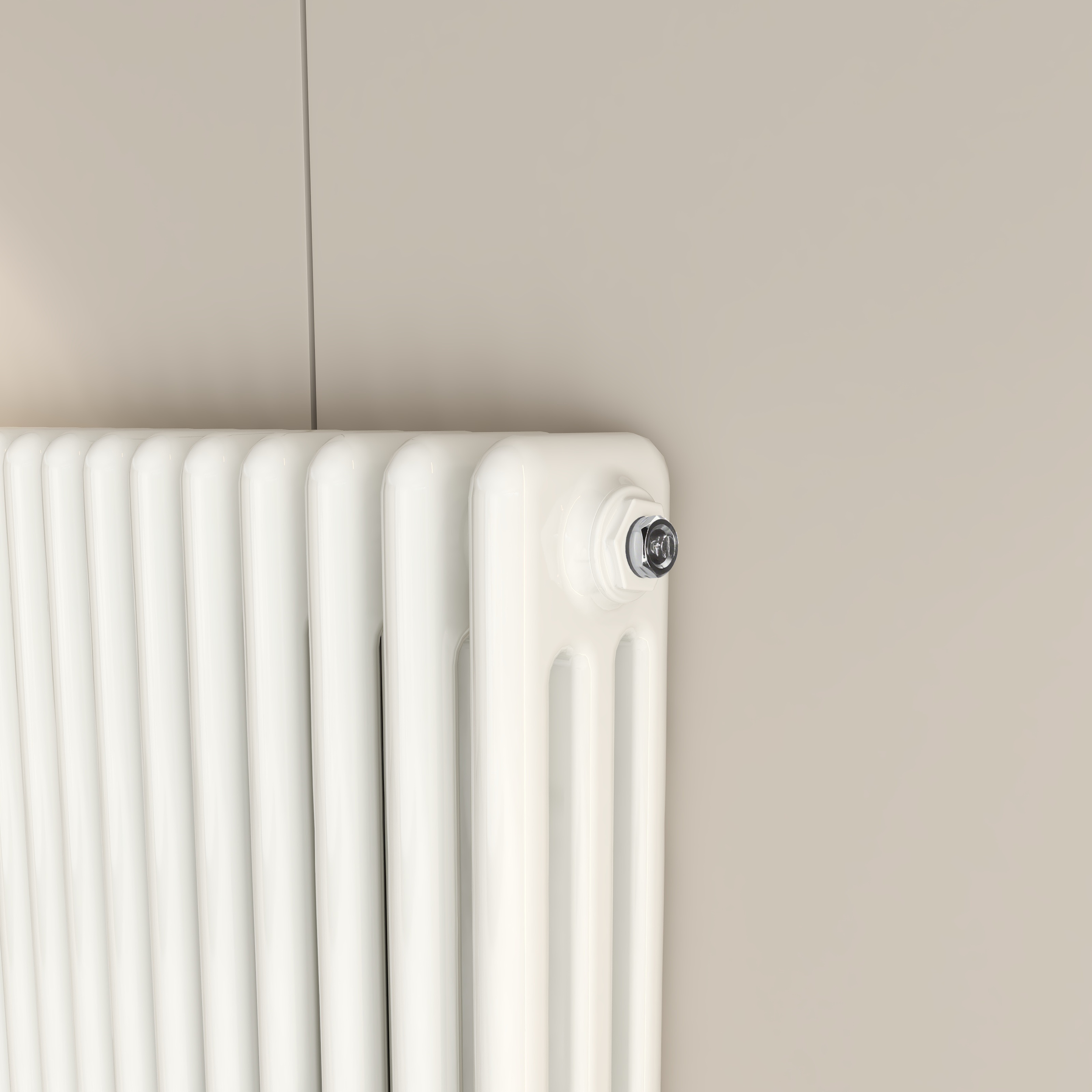 Image 11 of 11